- Your cart is empty
- Continue Shopping





-10%
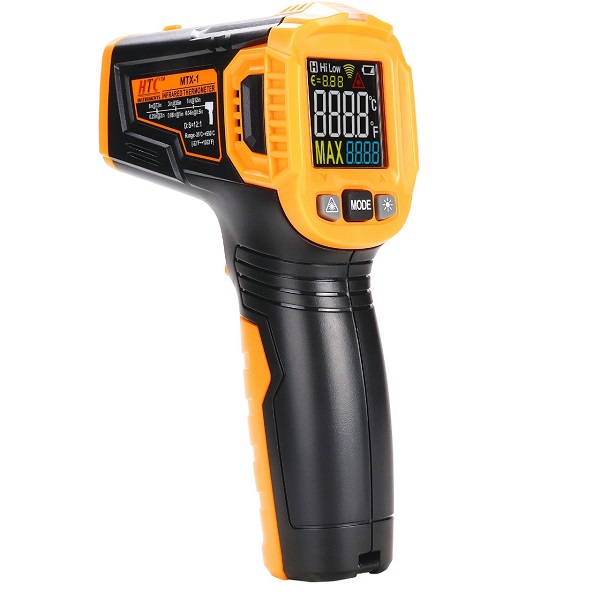
Infra Red Thermometer 1
₹6,406.78Current price is: ₹6,406.78. Original price was: ₹7,118.64.
Add to cart
Buy Now
- Working Principle: All objects with a temperature above absolute zero emit infrared energy. An IR thermometer uses a lens to focus this radiation onto a detector (thermopile), which converts the energy into an electrical signal, which is then converted into a temperature reading displayed on a screen.
- Non-Contact: The primary feature is the ability to measure temperature from a distance, which is useful for safety, hygiene, and convenience.
- Speed and Accuracy: They provide rapid, often instant, temperature readings, making them highly efficient for quick spot checks. Accuracy depends on factors like the distance-to-spot ratio (D:S) and the material’s emissivity
Infrared thermometers are versatile tools used across many industries and everyday applications.
- Healthcare and Medical Settings:
- Fever Screening: Quickly and hygienically check body temperature (usually at the forehead or ear) to detect fever, which is crucial for preventing the spread of contagious diseases like COVID-19.
- Patient Monitoring: For routine patient checks in hospitals by nurses and doctors.
- Pediatrics: Ideal for taking the temperature of children who might move around a lot, as it doesn’t require physical contact.



Reviews
There are no reviews yet.